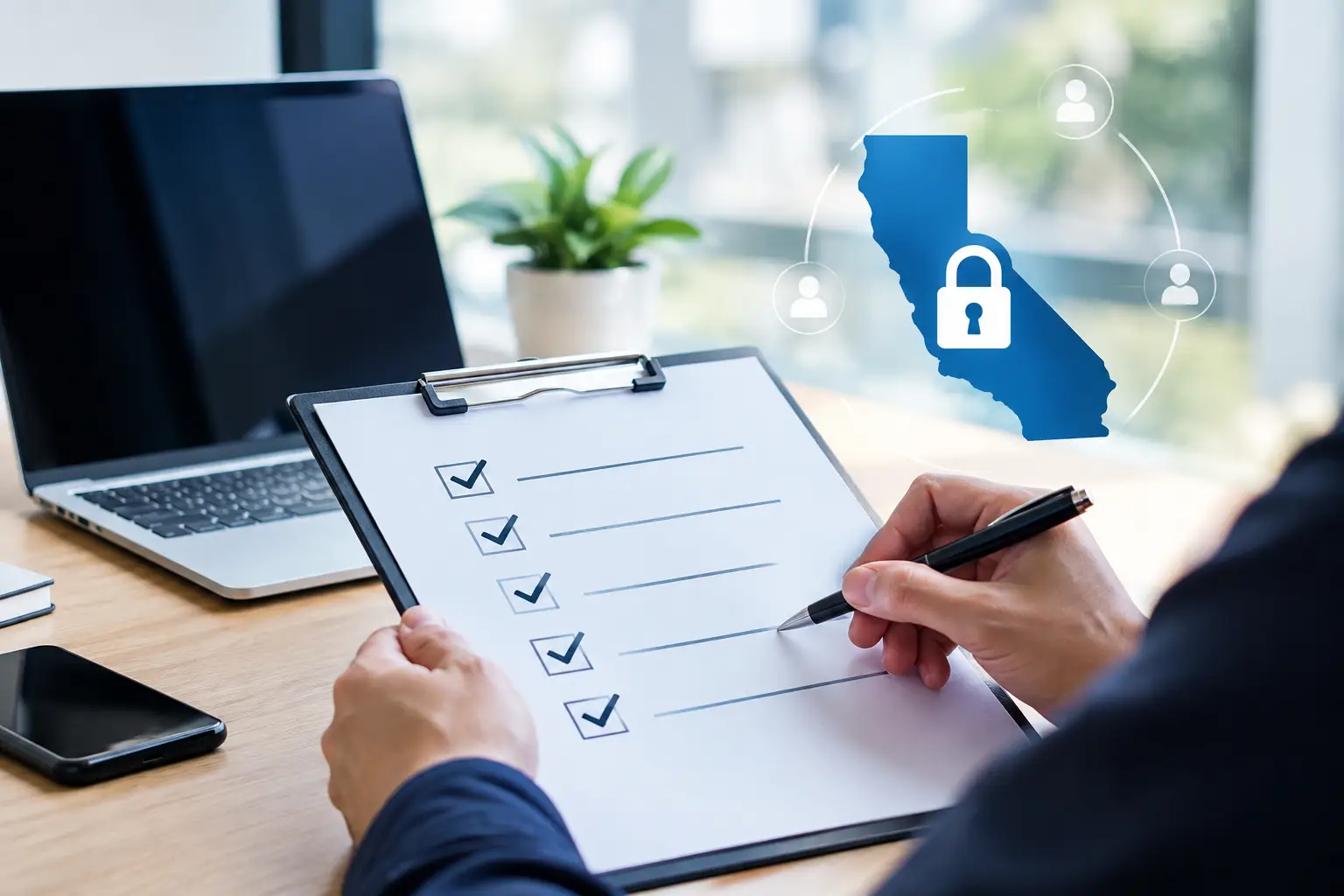
A CCPA compliance checklist is not a document to complete once and file away. For a growing organization, it is an operating discipline that determines how confidently you can collect data, serve California customers, answer enterprise security questionnaires, and pursue regulated opportunities.
California privacy obligations have evolved through the California Consumer Privacy Act and its amendments under the California Privacy Rights Act. The legal details deserve counsel, but the business mandate is clear: know what personal information you hold, why you hold it, who can access it, and how you will honor valid consumer requests. Cybersecurity is not just protection. It is positioning.
Does CCPA Apply to Your Organization?
CCPA generally applies to for-profit organizations that do business in California and meet one or more statutory thresholds, including annual gross revenue, the volume of California residents’ personal information handled, or the percentage of revenue derived from selling or sharing personal information. Applicability can be less obvious than it appears.
A company outside California may still have obligations if it serves California residents. A midsize professional-services firm may not meet the threshold today but may inherit contractual privacy requirements from a larger client, insurer, healthcare partner, or financial institution. Businesses that are not directly covered can still benefit from CCPA-aligned practices because privacy maturity increasingly influences vendor approval, contract eligibility, and reputation.
Treat this as a legal and operational assessment, not a guess. Engage qualified privacy counsel to determine your obligations, then give your IT, security, operations, and marketing leaders a shared implementation plan.
CCPA Compliance Checklist: The Operating Priorities
The checklist below focuses on the controls that turn a privacy policy into a credible business capability.
1. Map the personal information lifecycle
Start with a defensible inventory. Identify the personal information your organization collects from customers, prospects, employees, applicants, website visitors, vendors, and other contacts. Include information held in cloud applications, email systems, shared drives, CRM platforms, HR tools, accounting systems, mobile devices, backups, and paper records where relevant.
Then document the lifecycle: where information enters the business, why it is used, where it moves, how long it is retained, and how it is destroyed. Categories may include identifiers, contact details, financial information, professional data, online activity, geolocation, and sensitive personal information.
This is often the most demanding part of the process because data rarely stays in one system. Yet it produces value beyond compliance. A reliable data map improves incident response, system consolidation, retention decisions, and executive visibility.
2. Define the business purpose for each use
Data collection without a clear purpose creates unnecessary compliance and security exposure. For every category of personal information, document the business or operational purpose for collecting, using, disclosing, retaining, or sharing it.
The question is not merely whether a system can collect information. It is whether the organization can explain why it needs that information and whether the use aligns with what it has communicated to people. This discipline helps prevent informal data practices that emerge when teams adopt new software, spreadsheets, or AI-enabled tools without a privacy review.
Where possible, collect less, retain less, and limit access more precisely. Protection is the baseline. Growth is the objective.
3. Update privacy notices and collection disclosures
Your external privacy notice should accurately describe the categories of personal information collected, the sources, business purposes, categories of recipients, retention approach, and available consumer rights. Notices provided at collection should make the immediate context clear, particularly when collecting sensitive information or using information in ways people may not reasonably expect.
Accuracy matters more than legal-sounding language. A privacy notice copied from a generic template can become a liability if it describes systems, data uses, or rights processes that do not match reality. Marketing, HR, legal, operations, and IT should validate the content together.
4. Build a consumer-request workflow that works under pressure
CCPA rights can include access, deletion, correction, and limits related to certain uses of sensitive personal information. Consumers may also exercise opt-out rights connected to the sale or sharing of personal information, depending on the organization’s activities.
Create a documented workflow for receiving, logging, verifying, routing, fulfilling, and responding to requests within applicable timeframes. Assign accountable owners and establish escalation paths. A request may touch a CRM, email archive, help desk platform, accounting system, and backup environment. Without coordinated ownership, teams can miss deadlines or provide incomplete responses.
Verification deserves particular attention. An organization must balance the right to access or delete information with the obligation not to disclose data to the wrong person. The right procedure depends on the sensitivity of the request and the nature of the information involved.
5. Review vendors, service providers, and contracts
Privacy obligations extend beyond your own network. Your software vendors, managed providers, payroll partners, marketing platforms, data processors, and professional advisers may receive or process personal information on your behalf.
Maintain a vendor register that identifies what information each party receives, the business purpose, location of processing where relevant, security expectations, retention requirements, and contractual status. Review agreements for appropriate restrictions on use and disclosure, required assistance with consumer requests, confidentiality commitments, and incident-notification expectations.
Do not confuse a signed agreement with a completed risk decision. A vendor can be contractually acceptable yet operationally risky if it has excessive access, weak identity controls, poor offboarding practices, or no meaningful security evidence.
6. Apply access control and security safeguards
Privacy cannot be separated from cybersecurity. If unauthorized users can access personal information, the organization cannot credibly claim control over its collection and use.
Implement role-based access, multifactor authentication, device management, secure configuration standards, encryption where appropriate, logging, patch management, and tested backup and recovery practices. Review who has administrative privileges and remove access promptly when employees change roles or leave.
A Zero Trust approach is especially valuable for distributed organizations. Rather than assuming a person or device is trustworthy because it is inside the network, access is continuously limited and verified based on identity, device condition, and business need. This reduces unnecessary exposure while supporting a more flexible workforce.
7. Establish retention and defensible disposal rules
Keeping information indefinitely is not a privacy strategy. It increases the volume of data that must be protected, searched, disclosed, and recovered during an incident. Create retention schedules tied to legal, regulatory, contractual, tax, operational, and litigation-hold requirements.
The trade-off requires judgment. Overly aggressive deletion can disrupt legitimate business operations or recordkeeping obligations. Over-retention creates avoidable risk and cost. The right policy is specific by data category, system, and business purpose, with documented exceptions rather than informal workarounds.
8. Train the people who make privacy real
Your privacy program will fail at the handoff points if employees do not know what to do. Train customer-facing teams to recognize and route consumer requests. Train managers on approved data-sharing practices. Train IT and security personnel on access, logging, incident escalation, and secure disposal.
Security awareness training should also address the practical risks that undermine privacy: business email compromise, phishing, misdirected messages, unauthorized file sharing, weak passwords, and unapproved software. Technical controls matter, but employees make daily decisions that determine whether those controls hold.
9. Test, document, and improve
A privacy program needs evidence. Keep records of data inventories, request logs, vendor reviews, training completion, policy approvals, access reviews, incident exercises, and corrective actions. Documentation demonstrates operational maturity to clients, auditors, insurers, and regulators while helping leadership see where the program is improving.
Test the program through realistic scenarios. Can your team locate a consumer’s data across core systems? Can it verify identity and meet response deadlines? Can you identify which vendors received the data? Can executives make informed decisions during a privacy incident?
Turn Privacy Readiness Into a Market Advantage
For organizations in Los Angeles and Orange County pursuing larger clients, CCPA readiness can reduce friction during procurement and security reviews. Enterprise buyers increasingly assess whether a vendor can safeguard information, support privacy commitments, and remain operational during disruption. A clear privacy operating model makes those conversations more credible.
CMIT Solutions of LA helps growing organizations align cybersecurity, data governance, continuous monitoring, and compliance operations under a practical business strategy. The objective is not paperwork for its own sake. It is a more resilient organization that can demonstrate maturity when opportunity arrives.
Start by assigning executive ownership and validating the data you already have. The strongest privacy programs are built before a customer request, contract review, or incident forces the issue. Trust opens markets.